
Intermittent fasting (IF) is not a diet in the traditional sense — it's a pattern of eating that alternates between periods of eating and fasting. It doesn't tell you what to eat, just when. Research consistently shows it can reduce body fat, improve insulin sensitivity, reduce inflammation, and extend cellular health through a process called autophagy.
The Most Popular IF Methods
16:8 Method — Fast for 16 hours, eat within an 8-hour window (e.g., noon to 8pm). This is the most popular and easiest to maintain long-term. You skip breakfast and have your first meal at lunch.
5:2 Method — Eat normally 5 days a week, restrict to 500–600 calories on 2 non-consecutive days. Good for people who prefer full eating days over daily restrictions.
OMAD (One Meal a Day) — A 23:1 fast. Advanced and difficult to sustain, but produces rapid results for people who adapt well to it. Not recommended for beginners.
What You Can Have During the Fasting Window
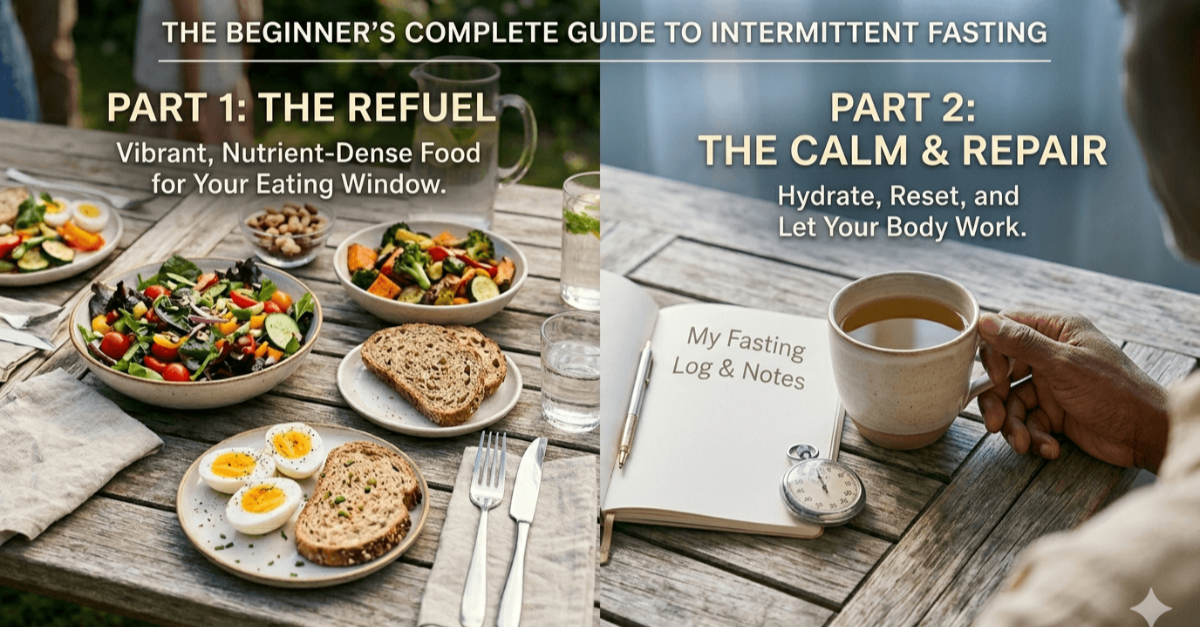
Water, black coffee, plain tea, and sparkling water do not break a fast — they have no calories and do not trigger an insulin response. Adding milk, sugar, or cream to coffee breaks the fast. Bone broth in small amounts is debated but generally considered fine for extended fasts.
Week 1: What to Expect
The first three to five days are the hardest. Hunger signals are largely habitual — your body is used to eating at certain times and will signal hunger accordingly. This fades within a week as your hunger hormones recalibrate. Headaches and irritability during week one are normal and temporary. Stay well-hydrated and slightly increase your salt intake to prevent electrolyte imbalance.
What to Eat During the Eating Window
IF works best when you eat whole, nutrient-dense foods during your eating window. High-protein meals reduce hunger significantly, which makes the fasting period easier. Prioritise: lean meats, eggs, fish, vegetables, legumes, nuts, and whole grains. Intermittent fasting does not give you permission to eat junk food — the health benefits are dependent on food quality.
Who Should NOT Try Intermittent Fasting
- Pregnant or breastfeeding women
- People with a history of eating disorders
- Type 1 diabetics (without medical supervision)
- Children and teenagers
- Anyone underweight or malnourished
If you have any chronic health condition or take medication, consult your doctor before starting IF.
The 30-Day Starter Plan
Week 1–2: Start with a 12-hour fast (7pm to 7am) — this is essentially just skipping late-night snacking. Week 3: Extend to 14 hours. Week 4: Reach the full 16:8 protocol. Gradual progression dramatically improves adherence and reduces side effects.



Comments